
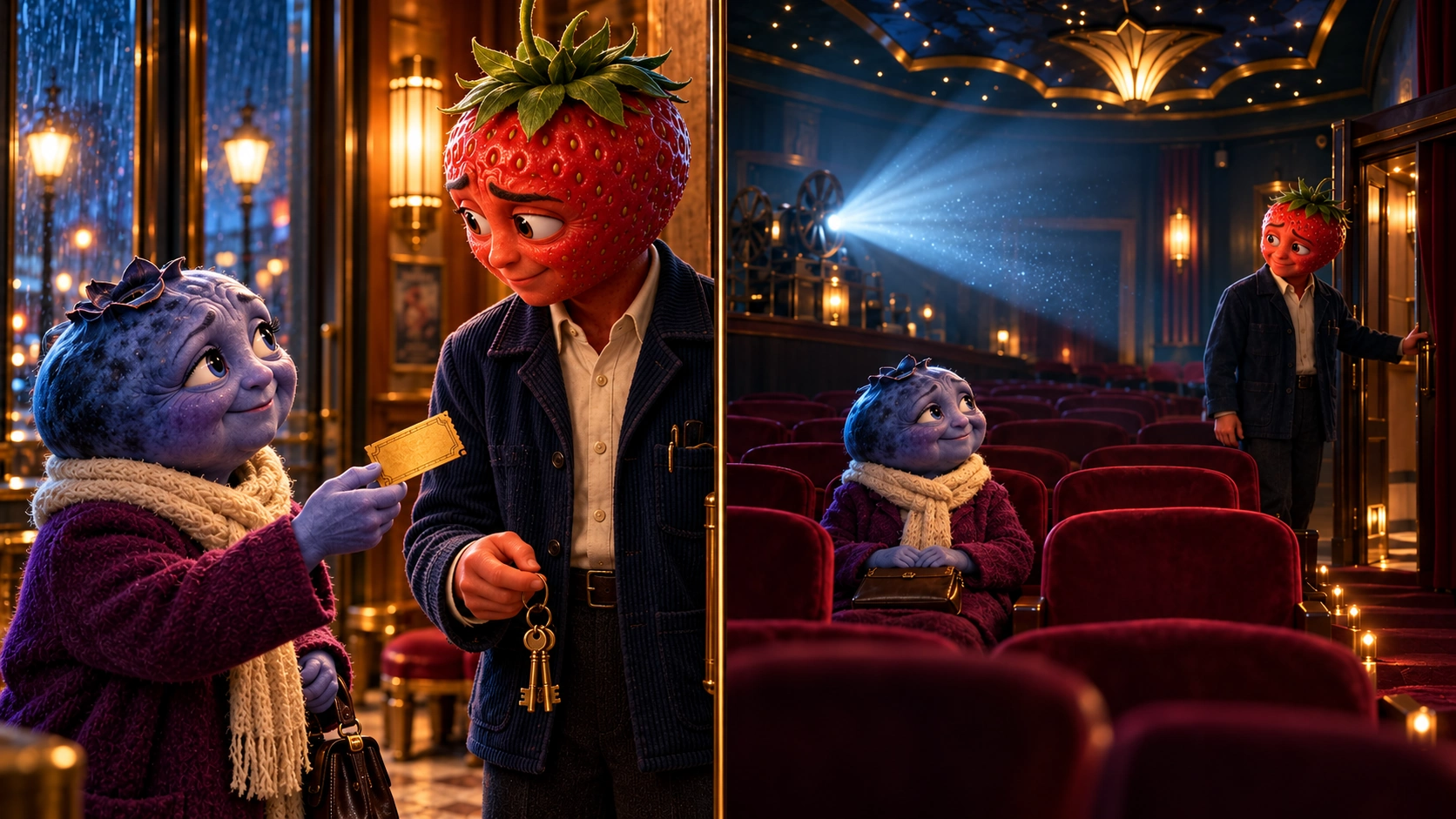
Written planning example · cinema illustration above
A fruit drama to plan: the last screening
An elderly blueberry woman arrives with a ticket she has kept for years. The strawberry projectionist is closing the cinema. Their looks and their decisions about the ticket carry the scene.
A doorway about to close
An eye-level two-shot keeps the door, hands and ticket visible. The blueberry offers the paper; the strawberry pauses while closing.
BLUEBERRY: “Do you still show the old films?”
Curiosity changes the exchange
Move closer to the projectionist’s reaction. He looks at the ticket and then at his visitor. She follows his gaze without explaining their whole history in one line.
STRAWBERRY: “Which one are you looking for?”
Make their choice visible
He opens the doorway and switches the auditorium lights back on. She steps inside and chooses a seat. Keep the same ticket; the setting and gestures show the change.
BLUEBERRY: “Then I’m staying for the screening.”
Continuity notes: blueberry in a plum coat, strawberry in a navy waistcoat, the same worn ticket and the same cinema doorway. Adapt these details to your own cast.
This is a written shot outline, not a tested video. Choose a comedy, mystery or different ending if it fits. Three shots and this particular emotion are not requirements for your projects.
See the image prompt, animation and two more ideas →Prepare your own conflict
- Choose whose problem the viewer follows. Name the lead, what they expect and the visible detail that makes them doubt another character. Write what the lead believes before deciding what the audience will see.
- Prepare a conflict and a visible reveal. Choose the actions and reactions that make this moment understandable. A prop, a line or a change of setting can move the story forward; a reveal is an option, not a required ending.
- Review individual scenes in Studio. Check character references and images in Studio, then write the dialogue and movement in each video prompt. Generation buttons show the image or clip cost. Express writes and generates the complete story automatically after launch, without this scene review or a quote screen. Review the final speech, captions and continuity before publishing.
Frequently asked questions
What is fruit drama in this guide?
It is a short fictional story in which fruit characters face a conflict or misunderstanding. This guide focuses on what the lead believes, the detail that changes that belief and the action they take afterwards. It does not promise a particular audience response.
How do I make the twist understandable?
Set up the important prop early, then show the detail that changes its meaning. In the cinema example, the visitor offers her ticket and the projectionist pauses. Let the audience see the detail that changes the exchange, then check that it is visible in the actual shots.
How should I direct the emotional change?
Choose a clear starting reaction and an action that shows the change. Keep dialogue short enough for the selected scene and review the delivery in the output. A written emotion does not guarantee the expression, voice or timing that the model will produce.
Does the welcome bonus cover a complete fruit drama video?
No. The 500-credit welcome bonus covers one image. Account creation does not require a credit card. A complete video needs additional credits. Consult the costs page; Studio shows each image or clip cost, while Express has no quote screen before launch.
Can I use the same cast in another drama?
You can save character references and select cast members for studio scenes. Keep the reference descriptions and review each new image and video. Reuse does not guarantee identical faces, clothes or voices.
Can I prepare an English fruit drama?
In Express, choose English and describe the conflict before launching automatic generation; check the generated speech and captions afterwards. In Studio, write the English line in each video prompt and review its image before generating the clip. Listen to the actual dialogue and review the captions in the result.
Plan the moment your character changes their mind
Create an account to prepare your scenes. The welcome bonus covers one image; a complete video needs additional credits. Consult the credit costs, then choose Studio for scene control or Express for automatic story creation.
Plan my drama →Workshop · written example to adapt
Make a fruit drama out of a misunderstanding.
Conflict can come from two readings of the same gesture. Here is a different direction for the cinema’s last screening; it is an alternative to the shot outline above.
What each character believes
The blueberry thinks the projectionist is refusing her old ticket. He thinks she wants a refund while he is closing for good. She grips the paper; he begins putting the till away. Their disagreement is visible before anyone explains it.
The line that changes the scene
BLUEBERRY: ‘I didn’t come for my money back.’ The strawberry stops. BLUEBERRY: ‘I just wanted to see the room again.’ He puts the till down, turns on the lobby lights and steps aside. A silence can carry the answer; no grand speech is required.
Choose who knows the truth at first and when the other character understands. For comedy or a more intense drama, change their relationship, vocabulary and reaction. Review continuity, voices and phone framing before publishing.
Keep your character recognisable across shotsPlan the details of your next scene
Practical examples to adapt to your own story.